



Scientific rigor
Every statement, piece of data or result communicated must be verifiable.
The new university founded on scientific and clinical excellence.
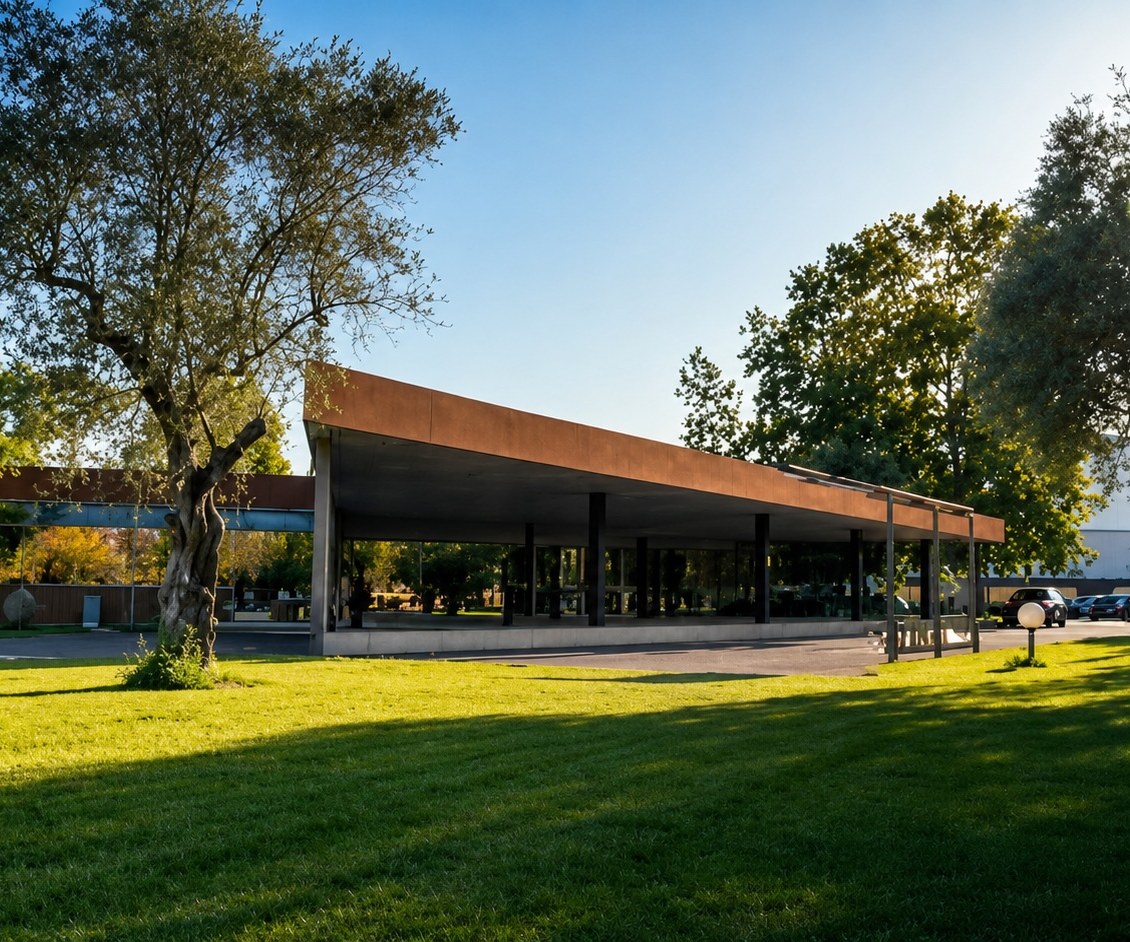
UniNeuromed is a university founded on the union of higher education, scientific research and the practical application of knowledge, within the Neuromed ecosystem.
The project addresses a simple question: what difference does it make to students when their university is located where research actually takes place? The answer lies not only in teaching informed by real facilities and expertise, but also in the opportunity to engage with laboratories, researchers and professionals throughout their studies.
UniNeuromed is not a generalist university. It is a specialist scientific institution offering a select range of degree programmes, with small class sizes, practical activities integrated throughout each programme and close links to the research ecosystem in which it operates.
Our mission is to educate people who can understand complex phenomena through the scientific method and transform knowledge into practical applications.
The University’s mission is structured around three key areas: offering rigorous and up-to-date degree programmes; enabling students to participate, gradually and under supervised guidance, in real-world research activities; and contributing to the scientific and cultural development of the local area in which it operates.
A university where the distance between the lecture theatre and the laboratory is measured in metres, not in years of waiting.
UniNeuromed embraces a model in which research is not a prospect reserved for the few upon completion of their studies, but an essential and ever-present part of the entire journey: through the methods we learn, the tools we use and the people we meet.
Every statement, piece of data or result communicated must be verifiable.
Teaching and organisational decisions are based on the actual circumstances of the students.
Knowledge grows through dialogue: between disciplines, between institutions, between generations.
Education and research have an impact on people and the local area: they must be carried out with due care.
Differences in background, circumstances and financial means must not determine a student’s educational path.
Costs, entry requirements, the status of courses and procedures are communicated clearly and verifiably.
The University’s governance bodies, their composition and their respective responsibilities are set out in the Statutes. CVs and letters of appointment will be published in this section once the necessary procedure has been completed.
| Governance Body | Structure |
|---|---|
| Board of Directors | Umberto Pagano, Chair; Marco Patriciello, Chief Executive Officer (CEO); Gabriele Trombetta, Director; Maria Letizia Melina, Director ; Mario Pietracupa, Director; Elisabetta De Vito, Observer; Francesco Capalbo, Observer. |
| CTO – Technical and Organisational Committee | Luigi Frati, Dean; Giuseppe Colpani; Giuseppe Novelli; Nicola Delle Noci; Sergio Pecorelli. |
| Evaluation Committee | Michele Bertani, Charman; Allegra Stefano Puglisi, Assunta Cioffi; Francesco Fornai; Vanda Lanzafame. |
| Quality Assurance Committee | Vincenzo Zara, Chairman; Alessandra Beccarisi; Teresa Romei. |
| Board of Statutory Auditors | Fernando Morante, Chairman; Giulio De Bernardo; Marco Ciccozzi. |
The organisational structure includes administrative departments and support services for teaching, research and students.
Quality assurance is the system by which the University ensures that its courses maintain appropriate standards over time, in line with their stated objectives. It includes course design, the monitoring of outcomes, student evaluations of teaching, and the corresponding improvement measures.
The set of procedures through which the University designs, monitors and improves its degree programmes.
The body that oversees the implementation of the quality assurance system and monitors its efectiveness.
The process of gathering students’ opinions on teaching and services, with the publication of overall results.
The measures authorising the launch of degree programmes, certifying that they meet the necessary requirements. Details will be published in this section.
Teaching activities take place on the Pozzilli Campus, in the province of Isernia, alongside the facilities of the Neuromed ecosystem.
Teaching laboratories and scientific facilities accessible under supervision.
Groups and centres operating within the ecosystem.
The Statute, regulations and Code of Ethics define the University’s organisation, the rules governing teaching and the standards of conduct expected of the university community.
The “Transparency” section contains the data and documents required to be published under current legislation, together with the University’s calls for applications, competitions and notices.
Recruitment processes for teaching, research and technical-administrative staff.
Discover the courses, learn about admission requirements, and request all the information you need to choose your university future.
No results. Try a more general term.
Use the arrow keys to scroll through the results, Enter to open them, Esc to close them.